
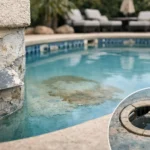
Top Signs Your Pool Needs Replastering Now
August 20, 2026
How to Remove Pool Stains Without Damaging Finishes
August 24, 2026A pool can look clean from the patio and still turn hazy once the afternoon sun hits the water. If you are asking, “why is pool water cloudy,” the answer is usually not one dramatic problem. Cloudiness is most often a sign that your filtration, water chemistry, circulation, or surface condition needs attention. The good news is that clear water can usually be restored quickly when the real cause is identified.
Cloudy water is more than a cosmetic issue. When you cannot clearly see the main drain or the bottom of the pool, it is not swim ready. Poor visibility creates a safety concern, especially for families and guests, and it can point to conditions that allow algae and bacteria to gain a foothold.
Why Is Pool Water Cloudy? The Main Causes
Pool water becomes cloudy when tiny particles remain suspended instead of being captured by the filter or dissolved through proper chemical balance. Those particles may be dirt, pollen, body oils, dead algae, calcium scale, or debris introduced by wind and nearby landscaping.
A chemical imbalance is one of the most common reasons. Chlorine may be too low to sanitize effectively, but high chlorine alone does not guarantee clear water. pH, total alkalinity, cyanuric acid, calcium hardness, and phosphate levels all affect how well chlorine performs and whether minerals stay dissolved in the water.
Filtration problems are another frequent cause. A cartridge that is clogged, a sand filter that needs backwashing, a dirty DE filter, or a pump running too few hours each day can leave fine particles in the water. The system may sound normal while quietly failing to move or filter enough water.
Early algae growth can also make a pool look dull, blue-gray, or slightly green before it becomes visibly green. In Orange County, warm weather, long sunny days, and heavy pool use can accelerate that process. A quick chemical adjustment may help in minor cases, but established algae often requires a more complete treatment and filter cleaning.
Hard water is particularly relevant for many Southern California pools. As calcium levels rise, minerals can fall out of solution and create a cloudy appearance. Scale may also form on tile, heaters, and interior finishes. Adding more chemicals without testing first can make a calcium-related problem worse.
Start With Safety and a Proper Water Test
Before treating cloudy water, check whether you can see the entire pool bottom. If you cannot, keep swimmers out until visibility improves. This is especially important in deeper pools, where a person in distress may not be visible from the deck.
Next, test the water with a reliable kit or have it professionally tested. Do not rely only on chlorine test strips if the water is consistently cloudy. A complete reading should include free chlorine, combined chlorine, pH, total alkalinity, cyanuric acid, calcium hardness, and, when needed, phosphates and total dissolved solids.
The test results tell you what not to do as much as what to do. For example, shocking a pool may be appropriate when chlorine is low or combined chlorine is elevated. But if the underlying issue is high calcium, poor circulation, or a clogged filter, repeated shock treatments can waste chemicals and delay the actual fix.
Check the Filter and Circulation System
Your pool filter is responsible for removing the fine debris that gives water a milky or hazy look. Start by checking the pressure gauge and comparing it with the normal clean-filter reading. Higher-than-normal pressure often means the filter needs service. Low pressure can point to a blockage, a suction-side air leak, a dirty pump basket, or a circulation issue.
Clean out the skimmer and pump baskets, then inspect the filter based on its type. Cartridge filters should be rinsed thoroughly and replaced when the material is worn or damaged. Sand filters may need backwashing, while DE filters require the proper cleaning and recharging process. Over-cleaning a sand filter is not always helpful, so follow the equipment manufacturer’s guidance or call a pool professional when you are unsure.
Run time matters, too. A pool typically needs enough circulation to turn over its water volume each day, but the right schedule depends on pool size, pump speed, weather, bather load, and equipment condition. A variable-speed pump may run longer at lower speeds, while an older single-speed system may need a different schedule. If cloudy water returns repeatedly, the issue may be inadequate flow rather than a one-time chemical problem.
Balance the Water in the Right Order
Once circulation is working, correct the chemical balance based on your test results. Bring pH and alkalinity into the appropriate range before making major sanitizer adjustments. Water that is too high or too low in pH can reduce chlorine effectiveness and irritate swimmers’ eyes and skin.
If algae or sanitizer demand is the cause, use the correct chlorine treatment and keep the pump running while the water clears. Brush the walls, steps, floor, and hard-to-reach areas around ladders and returns. Brushing breaks up early algae and moves fine debris toward the filter.
Cloudy water may need a clarifier or flocculant, but these are not interchangeable quick fixes. A clarifier helps the filter catch very small particles and is useful when the system is otherwise functioning well. A flocculant drops particles to the floor so they can be vacuumed to waste, which requires care and is not ideal for every pool setup. Using too much clarifier can create its own filtration problems.
Consider What Changed Around the Pool
The timing of the cloudiness often provides the best clue. Did the pool become hazy after a large gathering, a windy weekend, construction nearby, landscaping work, or a period when the pump was off? Pollen, dust, sunscreen, makeup, leaves, and fine soil can overwhelm a filter quickly.
A cloudy pool after heavy use may simply need a longer filtration cycle, cleaning, and a sanitizer adjustment. Cloudiness that appears after rain or refill water may be linked to diluted chemistry or mineral content. If it develops shortly after a remodel, plaster work, or tile repair, fine dust and curing materials may require specialized cleanup and monitoring.
For pools with older equipment, a failing pump, worn filter elements, cracked valve, damaged multiport, or plumbing restriction may be part of the problem. These issues are easy to overlook because water still moves through the returns. The question is whether it is moving at the rate needed to keep the pool clear.
When Cloudy Water Needs Professional Service
Some pool owners can resolve a minor haze with testing, filter maintenance, and balanced chemistry. It is time to bring in professional help when the water stays cloudy after treatment, turns green, has recurring algae, loses circulation, or shows unusually high calcium or filter pressure. It is also wise to call when you suspect a heater, pump, plumbing, or automated control problem.
A professional inspection can identify whether the pool needs a deep filter cleaning, algae treatment, acid wash, equipment repair, drain-and-refill strategy, or more extensive restoration. The right recommendation depends on the pool’s finish, age, water chemistry, and equipment. For example, an acid wash can improve staining and mineral buildup on certain surfaces, but it is not a routine answer for every cloudy pool and should be used carefully to preserve the finish.
South County Pools provides local maintenance, water-quality care, equipment troubleshooting, and green-to-clean service for Orange County homeowners who want their backyard clear, safe, and ready to enjoy. A trained pool technician can address the immediate cloudiness while helping prevent the same issue from returning next month.
Keep Your Pool Clear Between Visits
Consistent care is usually less expensive and less disruptive than recovering from a cloudy or green pool. Maintain an appropriate pump schedule, empty baskets, keep the waterline clean, brush regularly, and test the water often enough to catch changes early. After high use, hot weather, or a windy day, give the pool extra attention rather than waiting for the haze to appear.
A clear pool should feel effortless, not uncertain. When the water starts looking dull, treat it as an early maintenance signal. Prompt testing and the right repair or service can protect your equipment, preserve your pool finish, and get your backyard back to being the place your family wants to spend time.
