
Smart Pool Automation Installation for Orange County
July 25, 2026A great backyard pool should feel like it belongs to the home, not like it was dropped into an empty corner of the yard. With custom pool design Orange County homeowners can create a space that fits how they actually live: quiet morning swims, weekends with the kids, sunset entertaining, or a private place to cool off after a long day. The right design balances those goals with the realities of the property, local requirements, equipment access, and long-term care.
A pool is a major home improvement, so the best results begin well before excavation. Thoughtful planning helps prevent a beautiful pool from becoming difficult to use, expensive to operate, or hard to maintain.
Start With How You Want to Use the Pool
The pool’s purpose should guide every major decision. A family that expects frequent play and casual swimming may need a broad shallow area, generous steps, and open deck space for supervision. Homeowners focused on exercise may prefer a longer swim lane, while those who entertain often may put more square footage toward a spa, Baja shelf, fire feature, outdoor kitchen, or seating area near the water.
There is no single ideal pool shape. Freeform pools can soften a landscape and work well in organic garden settings. Rectilinear pools often complement contemporary homes and make efficient use of narrower lots. A geometric design can also accommodate a clean-lined spa, tanning ledge, and raised bond beam without making the backyard feel crowded.
Before choosing features, consider the moments you want the space to support. If the main goal is hosting, circulation between the house, pool, grill, and seating areas matters as much as the pool itself. If the pool is primarily for children and grandchildren, safe entry points, depth transitions, and clear sight lines deserve priority.
Custom Pool Design in Orange County Begins With the Site
Orange County properties are not interchangeable. A flat suburban backyard has different possibilities than a sloped coastal lot in Dana Point, Newport Beach, or Capistrano Beach. Existing walls, utility lines, drainage, mature landscaping, access limitations, and local setback requirements can all shape the design and construction approach.
Sun exposure is especially important. A pool that receives strong afternoon sun may stay warmer naturally, while a heavily shaded pool can need more heating support and may collect more debris. Wind patterns can affect comfort around the water and influence where a fire feature, cabana, privacy screen, or equipment pad makes the most sense.
Privacy should be planned early, not added as an afterthought. Strategic landscaping, walls, architectural screens, and elevation changes can make a pool area feel more secluded without closing off the yard. At the same time, a design should preserve views when a property has them. On many coastal homes, the goal is to frame the horizon rather than compete with it.
Access also affects cost and scheduling. Construction equipment needs a practical route to the backyard. Tight side yards, steep grades, or limited street access may require additional planning. An experienced local pool builder evaluates these conditions upfront so the design reflects what can be built properly, not just what looks good in a rendering.
Choose Features That Earn Their Place
Custom details should improve the way the pool looks, feels, or functions. A tanning ledge, for example, gives small children a place to play and adults a comfortable area to lounge partially in the water. It is a useful feature for many families, but it also takes up swim space. On a compact yard, that trade-off needs to be considered carefully.
A raised spa can create a focal point, add year-round use, and provide a natural gathering area. Waterfalls and sheer descents can bring movement and sound to the setting, though louder features may not be the best fit for homeowners who want a calm, quiet retreat. Fire bowls and fire pits can extend the use of the backyard on cooler evenings, but they require appropriate placement and clear separation from combustible materials.
Lighting is one of the most effective ways to improve both safety and atmosphere. Well-placed pool lights, step lights, and landscape lighting make the area easier to use after dark while highlighting tile, water movement, and architectural features. Modern LED systems offer flexible color options, but simple white lighting may be the better long-term choice for homeowners who want a timeless look.
Finishes deserve the same care. Tile, coping, plaster, and deck materials should work together with the home’s architecture and the expected level of maintenance. Natural stone can be striking, but some materials need more attention than porcelain or concrete pavers. A good design conversation includes both appearance and how each surface will perform around water, sun, salt air, and regular foot traffic.
Plan Equipment for Comfort and Efficient Ownership
The equipment behind the pool is just as important as the visible finish. Properly sized pumps, filters, heaters, plumbing, and sanitation systems help keep water clear, reduce unnecessary energy use, and make day-to-day ownership easier.
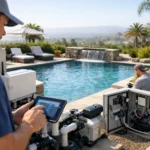
Variable-speed pumps are a popular choice because they can operate at lower speeds for routine circulation and higher speeds when needed for cleaning or water features. Automation can allow homeowners to control lights, temperature, pumps, and spa functions from a convenient panel or mobile device. These upgrades can simplify pool ownership, but the system should match the pool’s complexity. A straightforward pool does not always need every available control feature.
Equipment placement matters, too. It needs adequate access for service, sensible drainage, and enough distance to limit noise near patios or bedrooms. Hiding equipment completely may seem appealing, but a cramped or inaccessible pad can make future repairs more difficult. The best layout keeps the system discreet while allowing a technician to maintain it properly.
Build With Future Maintenance in Mind
A custom pool should be designed for the years after construction, not only for reveal day. That means considering skimmer locations, return placement, debris patterns, equipment access, water chemistry, and the materials that will need periodic cleaning or replacement.
For example, an oversized tree canopy may provide welcome shade but can also add leaves, pollen, and organic debris to the pool. A water feature with intricate stonework may look exceptional, but it needs regular attention to prevent buildup and preserve water flow. These are not reasons to avoid features. They are reasons to make informed decisions and plan for professional care when needed.
South County Pools brings three generations of experience to custom construction, remodeling, repairs, and ongoing maintenance. Working with one trusted local provider can make a difference after the build is complete, because the team caring for the pool understands its equipment, finishes, and design intent from the beginning.
Remodel or Build New?
Homeowners with an existing pool may not need a complete replacement to achieve a new look and better performance. A remodel can update worn plaster, cracked tile, outdated coping, inefficient equipment, poor lighting, or an underused deck area. Adding a spa, tanning ledge, automation, new tile, or a modern finish can change the entire experience of an aging pool environment.
Whether a renovation or new build makes more sense depends on the shell condition, plumbing age, desired changes, and budget. If the existing pool has repeated leaks, failing systems, and a layout that no longer works for the family, a more comprehensive project may offer better long-term value. If the structure is sound and the goal is primarily visual, resurfacing and targeted upgrades may be the practical answer.
A Clear Process Creates Better Results
Strong custom pool projects begin with an honest site evaluation and a clear discussion of priorities. Homeowners should expect to talk about style, use, budget range, construction access, equipment preferences, and the services needed after completion. Detailed plans and realistic selections help avoid costly last-minute changes.
It also helps to leave room for decisions that may evolve during the process. You may know you want a spa and new lighting from day one, while choosing between two tile colors after seeing samples in the backyard. The important thing is to make structural and equipment decisions early, then refine finishes with confidence.
Your backyard should be easy to enjoy, safe for the people who use it, and manageable long after construction is complete. A free estimate is a practical first step toward a pool design that fits your property, your family, and the way you want to spend time at home.
